
Tripoli – February 2, 2026
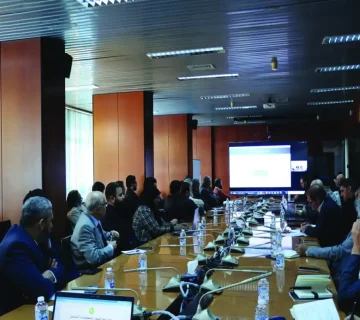
As part of efforts to strengthen institutional integration and support the data-driven digital transformation process, the General Information Authority, in collaboration with the Ministry of Technical and Vocational Education, announced the launch of the integrated smart geographic map for technical and vocational education institutions in Libya. This was announced during a follow-up meeting on joint work in the fields of data management and geographic information systems, held on Monday morning.
The meeting was chaired by the Minister of Technical and Vocational Education, with the attendance of Mr. Nader Melitan, Director of the National Database Department and Head of the Geographic Information Systems Division at the General Information Authority, along with the specialized working team. The strategic achievement was reviewed, representing a qualitative step in developing management mechanisms for the technical and vocational education sector based on an accurate and updated data system.
This map is the first comprehensive digital system reflecting the geographic distribution and the full operational reality of technical and vocational education institutions across the country, covering 102 educational institutions distributed over 38 technical colleges and 64 higher institutes.
The National Database Department at the General Information Authority was responsible for designing and building this map.
The National Database Administration at the General Authority for Information has undertaken the design and construction of this map, in coordination with the Ministry’s Informatics and Documentation Department, which oversaw the standardization, verification, and documentation of data related to educational institutions. The interactive geographic map provides an advanced digital system that allows for highly accurate documentation of physical and human resources, including facilities, equipment, and educational and administrative staff, while enabling the relevant authorities to convert data into analytical insights that support decision-making, prioritize development, optimize resource distribution, and design educational programs in line with labor market needs. This collaboration comes within the framework of building an integrated national information system for the technical and vocational education sector, contributing to enhancing planning and development efficiency and supporting the state’s aim for modern technical education that aligns with the requirements of national development and the knowledge economy.