Tripoli, Monday, July 20, 2026
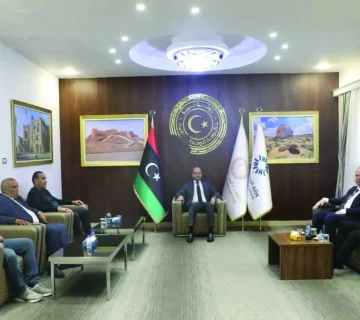
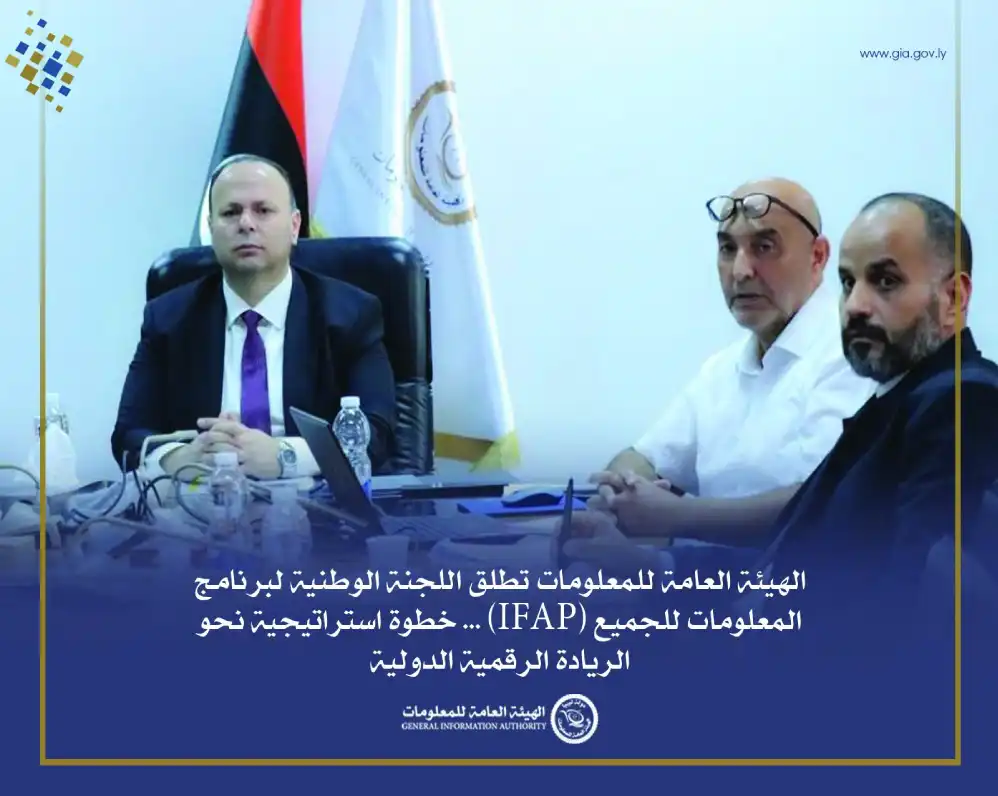
In a strategic move aimed at enhancing Libya’s information infrastructure and integrating it into international systems, the General Information Authority held the inaugural constituent meeting of the Libyan National Committee for the Information for All Programme (IFAP), chaired by Eng. Abdul Baset Salem Al-Baour, Chairman of the General Information Authority.
The meeting commenced with an opening address by the Chairman, who confirmed that the establishment of this committee under Resolution No. (50) of 2026 comes as a continuation of the Authority’s leading role in regulating the national information sector. He emphasized Libya’s ambition to be an active partner in global initiatives championed by UNESCO to bridge the digital knowledge divide.
The programme serves as an intergovernmental platform launched by UNESCO to create a collaborative environment that enables member states to exchange policies and expertise across six vital priority areas, including Information for Development, Information Literacy, Information Preservation, Information Ethics, Information Accessibility, and Multilingualism in Cyberspace.
In this context, the meeting reviewed the operational roadmap of the committee, which comprises representatives from the education, culture, telecommunications, and civil society sectors, alongside a group of specialized experts. The committee is tasked with key strategic duties, including representing the State of Libya on the Intergovernmental Council for the IFAP and in all relevant regional and international meetings, developing and executing a comprehensive national plan aligned with UNESCO priorities to ensure equitable access to information, and building international partnerships through direct coordination with the IFAP Secretariat at UNESCO to secure training, funding opportunities, and capacity-building support.
The formation of this committee marks a qualitative leap toward strengthening information governance in Libya. Through this initiative, the Authority aims to leverage existing national frameworks, such as the Supreme Committee for the National Information System, to ensure the alignment of efforts, bridge institutional gaps, and achieve Libya’s immediate, effective engagement in international development programs.
The meeting concluded with a reaffirmation to move forward with holding regular meetings and establishing specialized working groups to guarantee the desired impact at both national and international levels.