Tripoli, Tuesday, November 3, 2026
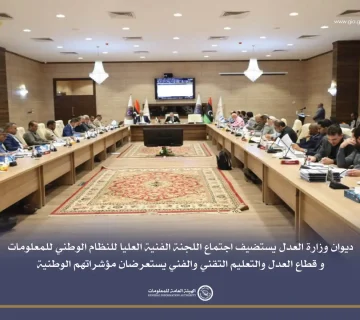
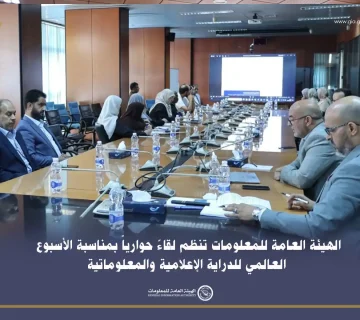
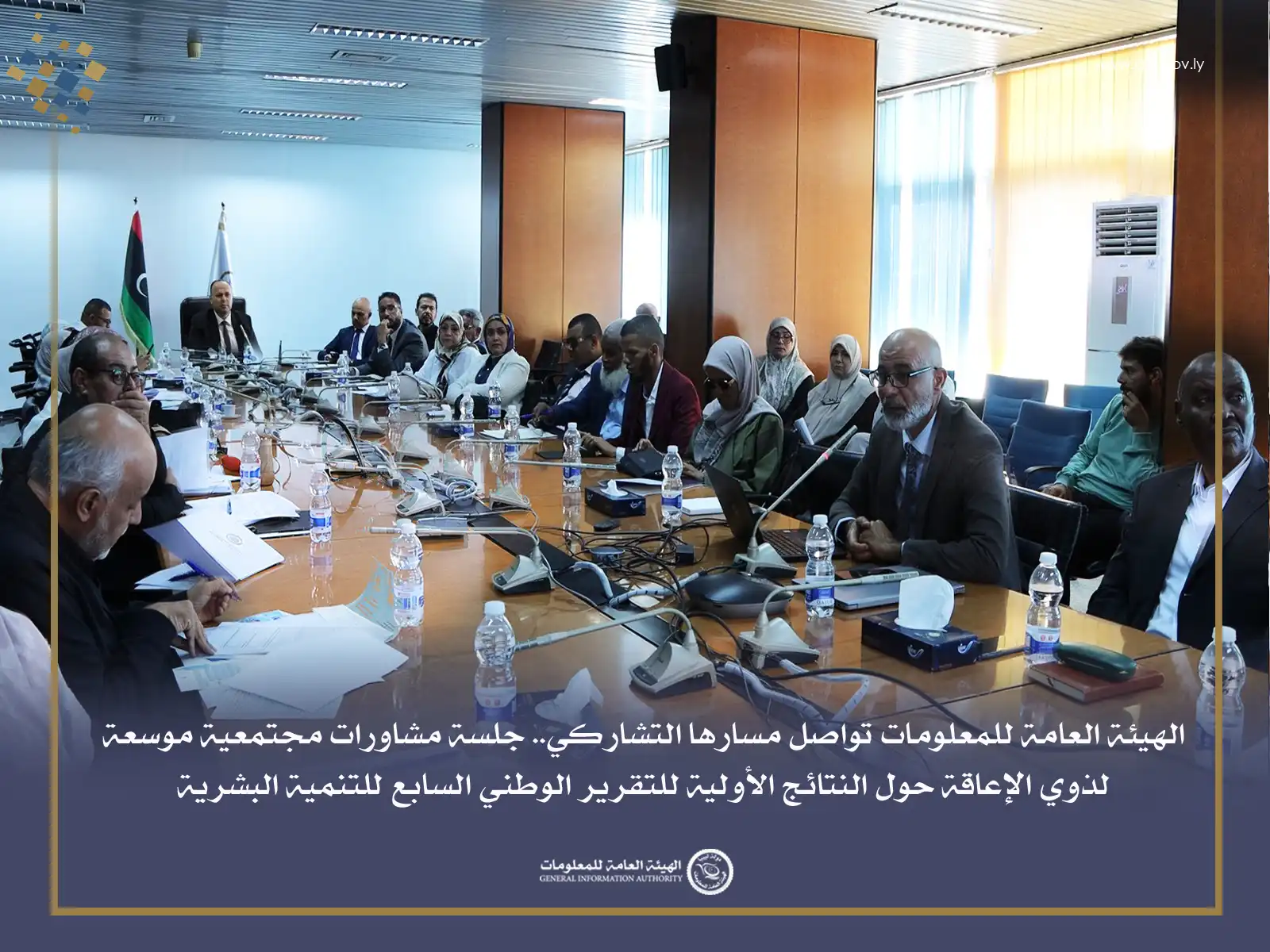
As part of executing its strategic plans to consolidate an inclusive approach and build evidence-based national policies, the General Information Authority (GIA) continued its series of community consultation sessions, organized in strategic partnership with the United Nations Development Programme (UNDP). An extended, specialized session was held this morning at the Authority’s headquarters to review the preliminary findings of the 7th National Human Development Report with persons with disabilities and representatives of relevant entities.
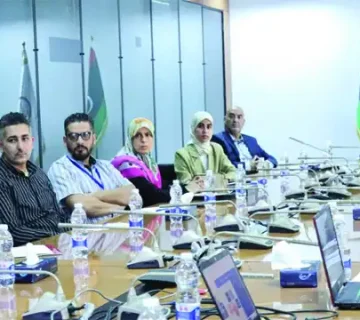
The session witnessed high-level attendance led by Eng. Abdel Baset Salem El-Baour, Chairman of the General Information Authority, alongside Mr. Mohamed Mustafa Madi El-Saheli, member of the Benghazi Municipal Council for the persons with disabilities seat, as well as department directors and specialists from the Ministry of Labour and Rehabilitation, the Ministry of Social Affairs, and the General Authority of Social Solidarity Fund. The session was further highlighted by the broad participation of numerous civil society organizations concerned with disability affairs from various Libyan cities (Benghazi, Sabha, Misrata, Tripoli, and Janzour), alongside qualitative attendance from persons with disabilities themselves. The session also saw prominent media coverage, with a well-known media personality taking part as an active guest in the discussions.
In his opening remarks, Eng. Abdel Baset Salem El-Baour emphasized that involving persons with disabilities in formulating the National Human Development Report is an essential pillar for ensuring equitable and inclusive development policies. He explained that the seventh edition of the report pays exceptional attention to the role of technology and digital transformation as the most powerful tools for overcoming physical and institutional barriers. This approach aims to provide an accessible digital and information environment that guarantees fair access to services, education, and sustainable job opportunities, stressing that building an accurate and comprehensive national database remains the reliable foundation for guiding development decisions that meet the aspirations of this vital segment of society.
For his part, Dr. Osama El-Matri, representative of the United Nations Development Programme, commended the professional level and advanced participatory approach with which the General Information Authority manages these national consultations. He confirmed that UNDP’s support for this track reflects the core principle of sustainable development: “Leaving No One Behind.” He praised the dedication to involving persons with disabilities and their organizations in shaping the report’s vision, contributing to developmental outcomes that foster equal opportunities and build more resilient and equitable communities.
The session included a presentation of the methodological framework and preliminary findings contained in the report’s chapters, delivered by Dr. Mohamed Ibrahim El-Hamali, Head of the Research Team, followed by an open discussion and interactive dialogue.
Participants from civil society organizations and persons with disabilities from various regions offered rich insights and recommendations. These focused on leveraging tech solutions and smart applications to facilitate physical and digital accessibility and mobility for persons with disabilities, aligning national legislation to ensure their effective and productive integration into the labor market and knowledge economy, and enhancing sustainable institutional partnerships to guarantee their systematic representation in future development plans.
Building on these outcomes within the same participatory context, a key segment of the meeting highlighted the Authority’s practical efforts toward inclusion. Eng. Mounir El-Adl, Director of the Planning and Projects Department at the Authority and Rapporteur of the Libyan National Committee for the Information Society, delivered a comprehensive presentation on the “National Digital Accessibility Policy,” which was developed and issued by the Authority in early 2025. He also detailed the Authority’s efforts through the Libyan National Committee for the Information for All Programme (IFAP)—established in cooperation with UNESCO and in strategic partnership with key national institutions—to strengthen the information infrastructure and bridge the digital divide.
Eng. Mounir El-Adl outlined the goals of the policy and its implementation mechanisms to ensure that information and digital services are easily accessible to persons with disabilities, highlighting how these initiatives foster their full integration into the knowledge society.
The session concluded with a commitment to compile all technical and community recommendations to integrate them into the final draft of the 7th National Human Development Report, serving as a national reference document crafted by Libyan hands for an inclusive and fair developmental future for all members of society.