Derna | Tuesday, May 12, 2026
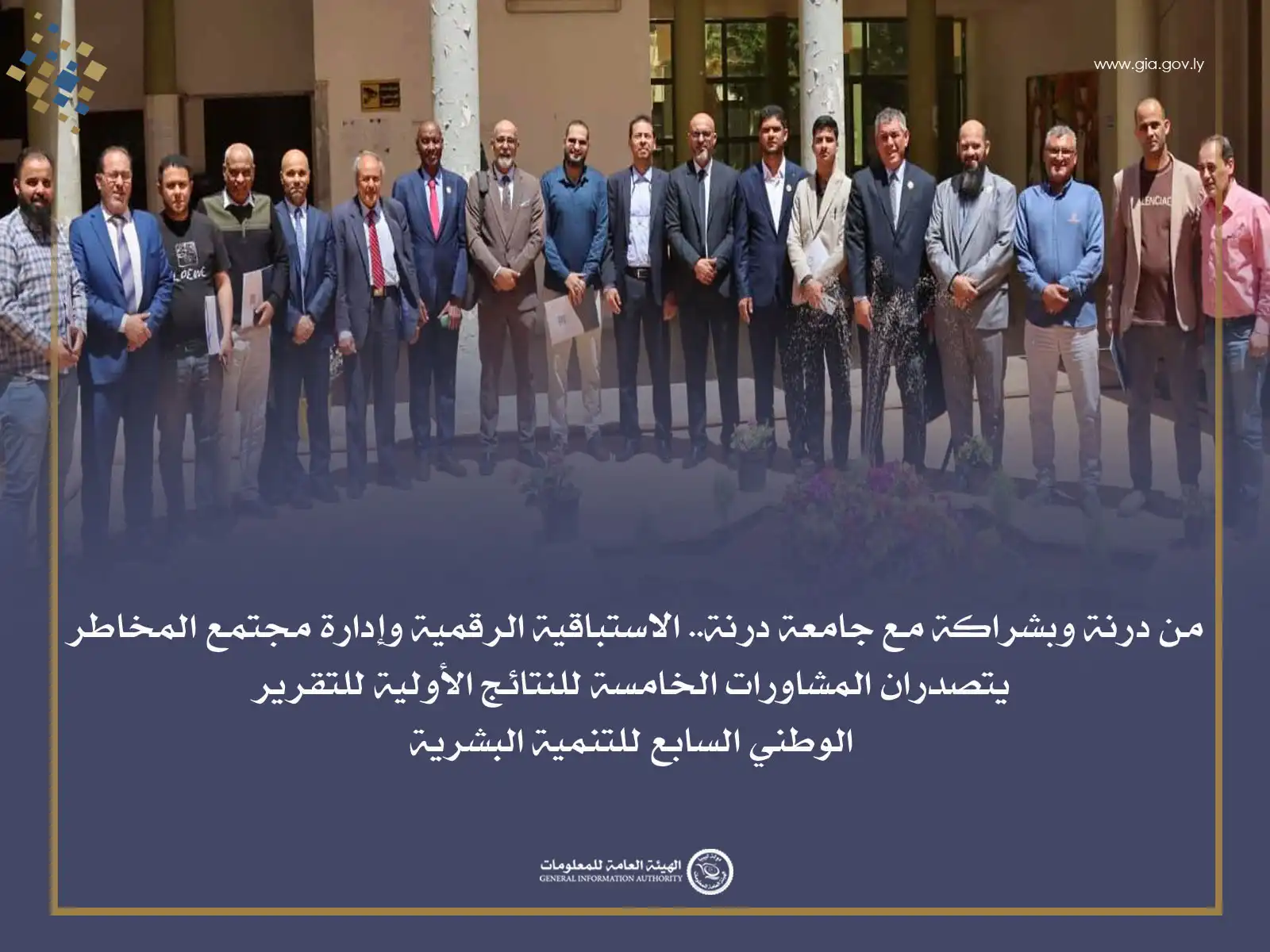
Taking practical steps toward building a safer national future, the General Information Authority (GIA) held today, Tuesday, at the University of Derna, the fifth session of community consultations to discuss the preliminary results of the Seventh National Human Development Report. This initiative is part of a strategic partnership with the United Nations Development Programme (UNDP) and in close cooperation with Libyan universities.
The session was attended by Professor Dr. Nasr Mohammed Al-Mansouri, President of the University of Derna, representatives from the GIA and UNDP, the report drafting team of experts and researchers, and a elite group of academic professors and civil society organizations. There was an official emphasis that Derna today—through its harsh experiences and steadfast resolve—has become the most significant national center for enriching the “Risk Society” pillar with vision and precise scientific analysis.
The technical presentations provided by the drafting team and experts focused on extracting lessons learned from the “Daniel” flood disaster. They presented a forward-looking vision to transform these lessons into proactive systems capable of precaution and resilience against future crises. Detailed light was shed on the core role of digital transformation as the effective and guaranteed tool for developing early warning and crisis management systems through real-time data flow. This makes the digital experience in Derna a model to be followed in building developmental policies based on information security and the protection of lives and property.
The consultations also included a comprehensive presentation on the economic pillar and the report’s preliminary results. Official speeches praised the capability of national cadres and the work team in Derna to provide robust analytical readings that bridge field reality with academic vision. At the conclusion of the event, the session witnessed valuable interventions from academic elites who enriched the discussion with practical and methodological proposals.
Public participation was also facilitated through “Barcode” technology to fill out electronic opinion surveys. This step aims to enhance participatory democracy in policymaking and ensure that the views and aspirations of the local community in Derna are an inherent part of the Final National Report, confirming that the Libyan citizen is the primary driver and goal of all sustainable development efforts.