Wadi Al-Shati | Monday, April 27, 2026
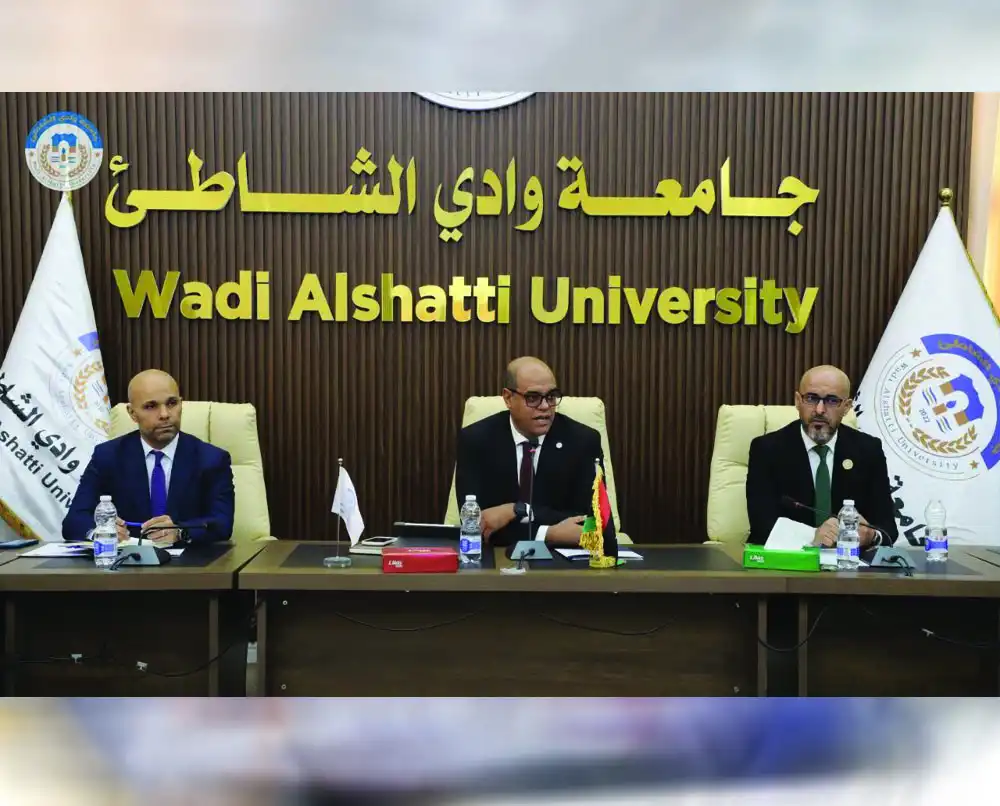
As part of the efforts of the #GeneralInformationAuthority to enhance data quality and support evidence-based policies, and within the framework of the #national academic consultations, Wadi Al-Shati University hosted the second session of community consultations for the preparation of the #SeventhNationalHumanDevelopmentReport. This was coordinated jointly by the General Information Authority, Wadi Al-Shati University, and the United Nations Development Programme.
The session witnessed a wide and distinguished attendance, including the University President, Professor Dr. Nasser Abuhamoud, the Education Supervisor of Brak Al-Shati Municipality, several deans of faculties and directors of departments, in addition to the leaders and staff of the General Information Authority, as well as a group of academics, experts, researchers, and representatives of civil society organizations.
Also participating in the session were representatives of the United Nations Development Programme, along with the chair and members of the report’s editorial board, and the head of the research team, in an attendance that reflected a high level of national engagement with human development issues in Libya.
The session began with a speech by the university president, who affirmed the academic institution’s readiness to actively contribute to supporting the preparation of the report, while the General Authority for Information emphasized that data quality constitutes the fundamental pillar for sound decision-making. For his part, the representative of the United Nations Development Programme highlighted the strategic importance of human development reports as a tool supporting policy-making and achieving sustainable development goals.
On the technical level, the methodology for preparing the report and its preliminary results were reviewed, with a focus on challenges and risks, in addition to highlighting the role of Wadi Al-Shati University in supporting educational paths and local development. Some preliminary findings from the report were also presented and discussed with the attending specialists.
The session concluded with interactive discussions and valuable contributions from the participants, contributing to enriching the report’s outputs and enhancing its accuracy and alignment with the national reality.