Tripoli | Monday, June 1, 2026
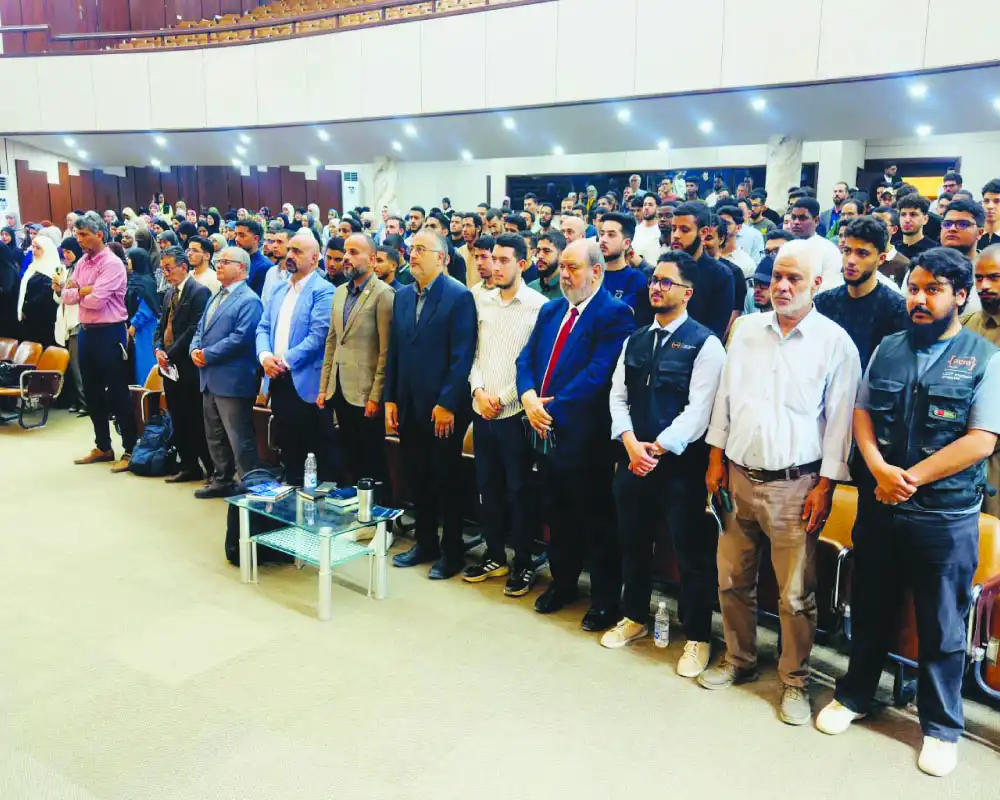
Within the framework of its participation in the activities of the National Information Technology Day, hosted by the Faculty of Science at the University of Tripoli, the General Authority for Information reviewed a number of its initiatives and national projects aimed at supporting digital transformation and enhancing the data and innovation ecosystem in Libya.
During the sessions accompanying the event, Engineer Houssam Al-Rabti gave a presentation addressing the Authority’s vision in the field of digital transformation, reviewing the most prominent national projects implemented by the Authority to support the digital economy and enable researchers, innovators, and state institutions to benefit from modern technologies and national data.
The presentation focused on the National Open Data Platform as one of the pioneering national initiatives that the Authority is working to develop, which represents the first documented national digital repository for open government data. It allows students, researchers, academics, and entrepreneurs to access official and updated data issued by state institutions, according to international standards that ensure ease of access and reuse.
The presentation explained that the platform provides data in standardized and flexible digital formats, such as CSV and JSON, facilitating its utilization in scientific studies, academic research, graduation projects, and digital applications. This contributes to supporting innovation, enhancing transparency, and empowering a data-driven economy.
Engineer Al-Rabti also reviewed the Libyan Digital Innovation Lab, which aims to provide a supportive national environment for innovation and the incubation of promising technical ideas and initiatives. This was alongside the National Innovation Map Platform, which works on surveying and documenting digital initiatives and projects in both the public and private sectors, thereby enhancing cooperation and knowledge exchange among various active entities in the national innovation ecosystem.
The General Authority for Information emphasized that these initiatives come within its continuous efforts to build an integrated digital infrastructure, establish the principles of transparency and data availability, and support scientific research and innovation, contributing to achieving the goals of digital transformation and sustainable development in Libya.
The Authority praised the organization of these scientific events, which represent an important platform for dialogue and the exchange of expertise between government institutions, universities, and researchers, confirming its commitment to continuing the development of national digital initiatives and strengthening partnerships with academic and research institutions to serve the march of digital transformation in Libya.